
More Action. More Offers. More Satisfaction.. Start with a casual chat to craft a plan as unique as your home’s story. Book a Call
When you decided to sell, you did some math. Sale price, minus what you owe, minus the commission. That’s your number.
That number is wrong. Not because the commission is wrong, but because it’s the only cost you counted.
Almost every seller we talk to runs the same calculation. Then, when closing comes, they look at the settlement statement and see lines nobody warned them about.
Take concessions. A few years ago, they were the exception. Today, they’re closer to the norm, and most sellers still walk in not expecting to make one at all. It’s become one of the more common surprises on the settlement statement, and one of the bigger checks a seller writes.
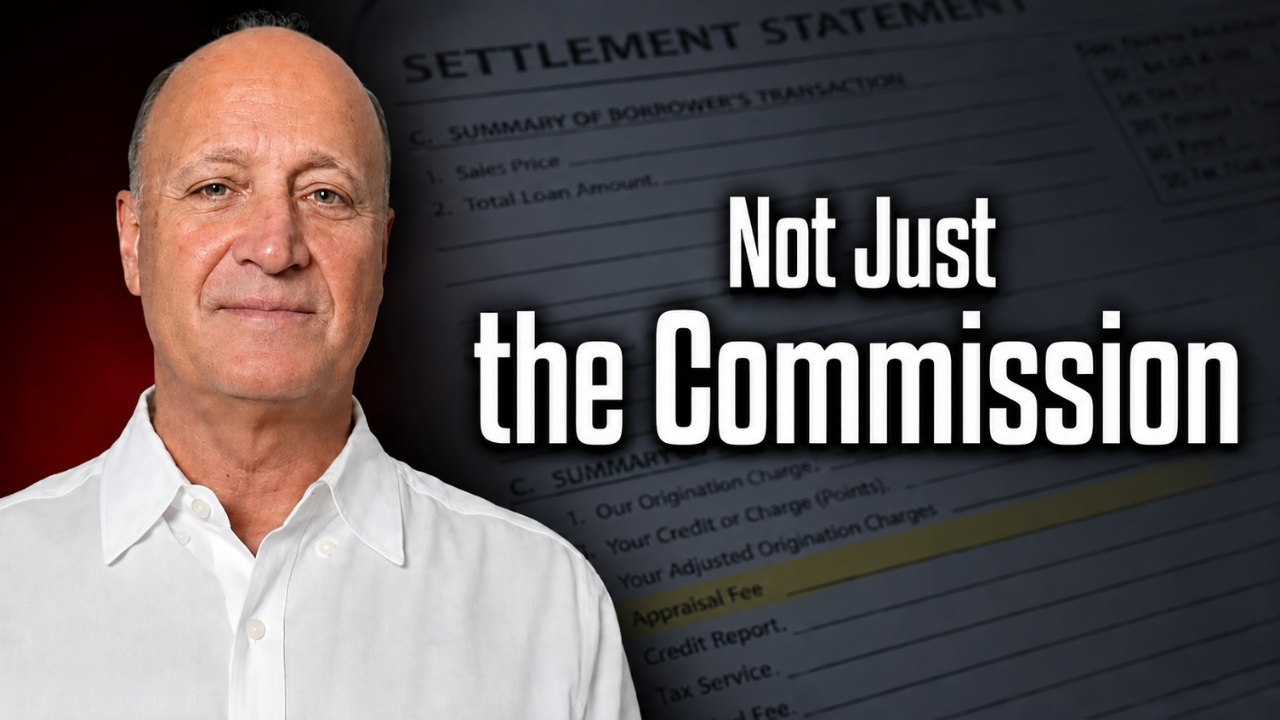
Let’s walk through what’s actually on that statement.
The commission is the one you already know about. It’s the largest single line, and it’s negotiable; it always has been. Whatever we agree to goes on the listing agreement, and we’ll walk you through what it covers before you sign. But you already budgeted for this one. It’s not what surprises you. Everything after it is.
A concession is what surprises people. It isn’t a price cut. It’s you covering something on the buyer’s side to close the deal: closing costs, a repair credit, or money toward buying down their rate. It comes out of your proceeds as a credit, and it’s not always a substitute for a price cut; plenty of sellers do both. When buyers have more options, they ask for more, and lately more are getting a yes.
Here’s where it gets especially important in Chicagoland, where a national “just figure X percent” number falls apart completely. Your costs don’t just depend on the sale price. They depend on which side of a municipal line your home sits on. You’ve got title and closing fees, prorated property taxes, your mortgage payoff with interest through closing, attorney fees, because Illinois closings are handled by attorneys, and transfer taxes. And transfer taxes are where Chicago sellers get caught off guard.
Illinois imposes a transfer tax, and Chicago adds a third layer. The state charges the seller a transfer tax, currently $0.75 per $500 of the sale price as of this summer, and Cook County adds another $0.25 per $500. Sell inside the City of Chicago, and there’s a third layer on top. The larger city portion falls on the buyer, but the seller still owes the CTA portion, another $1.50 per $500. Three separate taxes on one sale, before you even get to title and attorney fees.
Step outside the city and it changes again. Many suburbs add their own municipal transfer tax, and they don’t all handle it the same way. Some put it on the seller, some on the buyer, some split it, and plenty of towns have none. So a seller in Chicago and one in Naperville or Orland Park can net very different amounts on identical prices, purely because of location. That’s why anyone quoting you one percentage for the whole metro is guessing.
That’s not a dodge. It’s the actual answer, and it’s why this conversation has to be local.
So here’s what we’d tell you to do before you list. Don’t ask what it costs to sell. Ask what you walk away with. Those are different questions, and only one matters. The costs are just line items. Net proceeds are the number you actually live on.
We’ll build that number for you before you ever sign a listing agreement: every line, your municipality, your payoff, and a concession estimate for your market.
Give us your Chicago-area address, and we’ll map out what you’d realistically walk away with. Call or text us at 708-629-5151, email us at ron@thewexlergroup.com, or visit thewexlergroup.com. Better to see that number now than at the closing table.
-
More Action. More Offers. More Satisfaction.. Start with a casual chat to craft a plan as unique as your home’s story. Book a Call
-
Free Home Valuation. Don’t trust a Zestimate. Get a personalized home valuation directly from one of our team’s top agents. Get Estimate
-
Free Newsletter. Get our latest Q&A, insights, and market updates to make smarter decisions. Subscribe Now